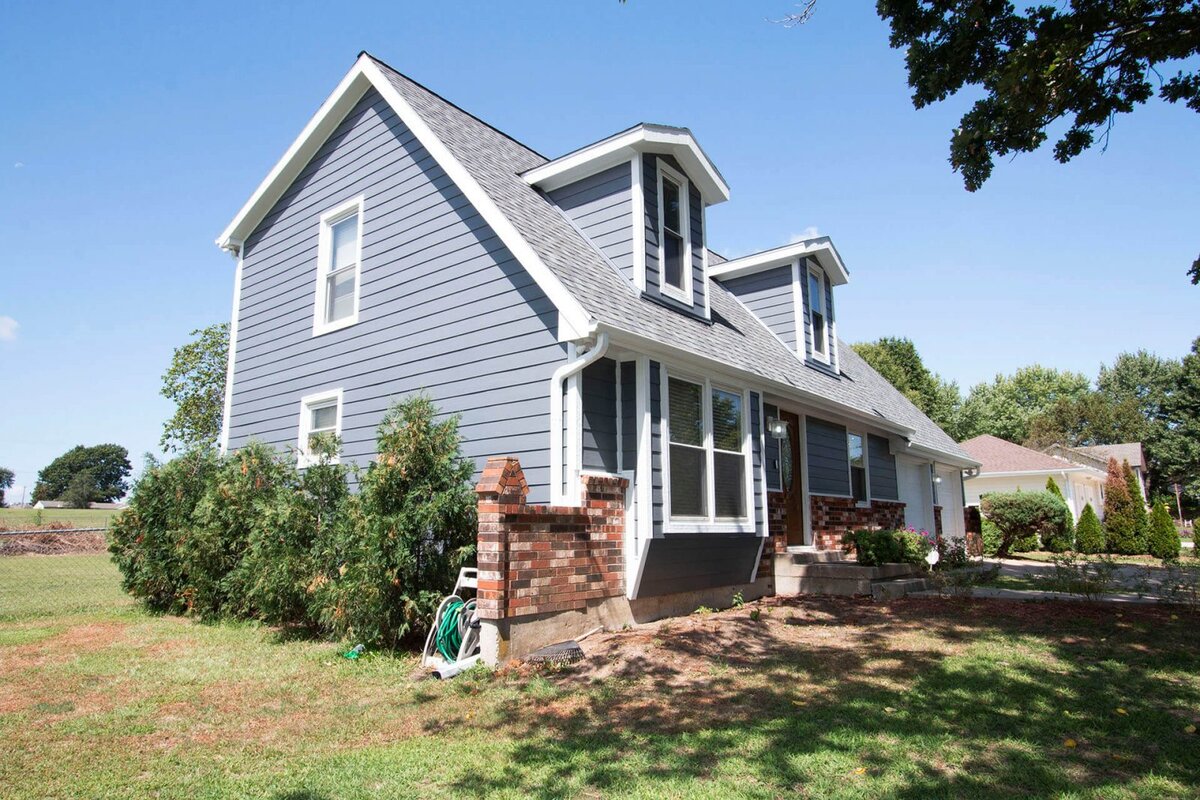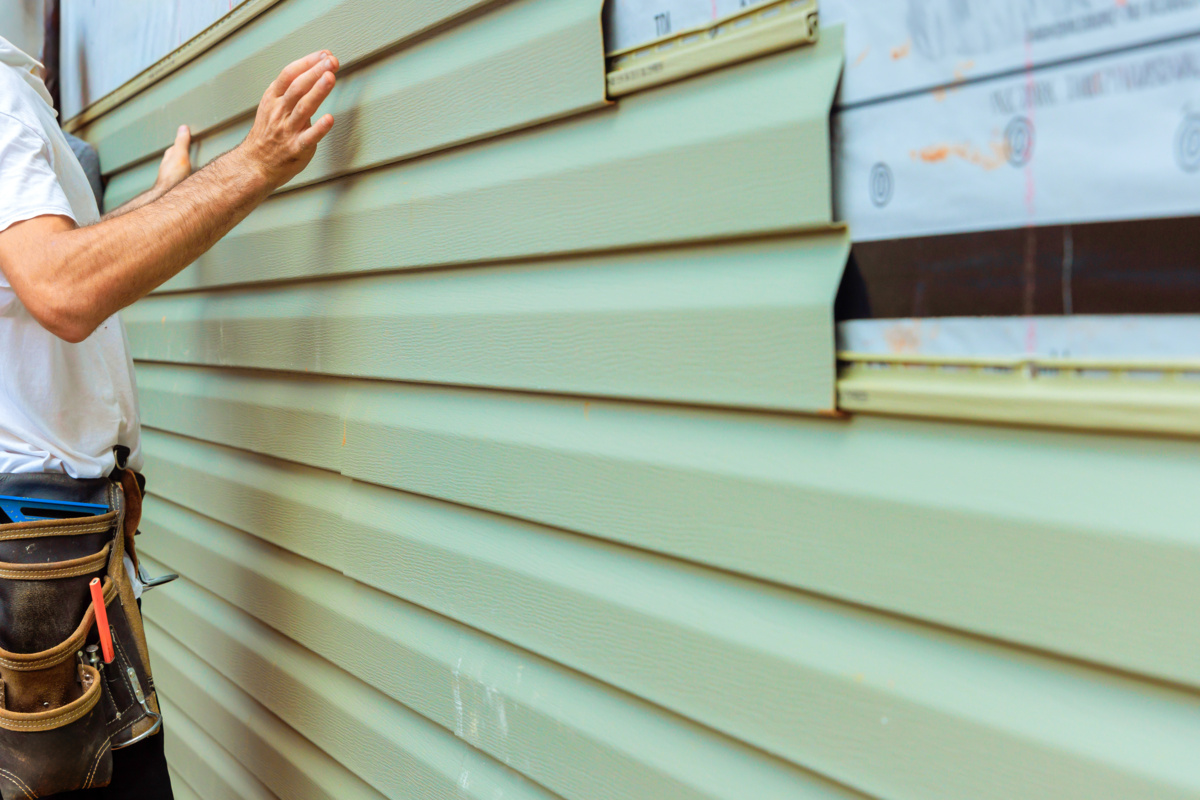


The best house siding depends on what your home needs. Some materials are built to last. Others are easier on the budget. A few give you a balance of both.
Below, we’ll walk you through the ones we install most, explain what sets them apart, and point out a few things to watch for before you choose.
Types of House Siding (With Pros and Cons)
As contractors, we work with many types of siding. Each one has its strengths. Here’s what we tell homeowners when deciding which material is right for them.
Vinyl Siding – Most Popular and Budget-Friendly
Vinyl is one of the most common siding choices we install. It’s lightweight, easy to clean, and doesn’t need painting. It comes in a wide range of colors and textures. Homeowners like that it’s affordable and holds up well over time. Vinyl is a smart choice if you want a clean look without a lot of upkeep.
Best for: Budget-conscious homeowners and basic exterior upgrades.
Fiber Cement Siding – Durable and Weather-Resistant
Fiber cement siding is built to last. It stands up well against wind, hail, moisture, and even fire. Brands like James Hardie are popular because they combine strength with a wood-like appearance. This material works well in climates like ours, where the weather can be unpredictable.
Best for: Homeowners wanting long-term value and strong protection.
Engineered Wood Siding – Real Wood Look, Less Upkeep
This siding gives the look of real wood but is treated to resist moisture and pests. It’s lighter than fiber cement and quicker to install. Engineered wood is a good middle-ground option for homeowners who want curb appeal without constant maintenance.
Best for: Those who want a natural look with lower upkeep.
Natural Wood Siding (Cedar, Pine, Redwood)
We don’t install this often unless the homeowner is ready for regular care. Real wood siding needs sealing or staining to keep moisture and insects out. It does offer beautiful character and texture, but the maintenance schedule is something to seriously consider.
Best for: Custom homes or buyers focused on natural materials.
Stone Veneer Siding – Lightweight but Elegant
Stone veneer gives you the look of stone without the heavy cost and labor. It’s a great accent for entryways, columns, or full walls. We use this to boost curb appeal on homes that need a touch of luxury without the full price of masonry.
Best for: Homeowners focused on appearance and value.
Metal Siding – Modern and Low Maintenance
Metal siding, especially steel or aluminum, offers a clean, modern look and strong protection. It’s insect-proof, fire-resistant, and holds up to the elements. Some metal siding can dent, but most types today are treated to prevent corrosion and damage.
Best for: Contemporary homes and areas with harsh weather.
Insulated Siding – Energy Savings Built-In
Insulated siding is regular vinyl or fiber cement with foam backing. It adds a layer of thermal protection to help reduce energy bills. We recommend this for homeowners looking to improve efficiency without adding insulation inside the walls.
Best for: Energy upgrades and older homes with limited wall insulation.
Siding Comparison Chart: Which One Is Right for You?
| Siding Type | Cost | Maintenance | Durability | Appearance | Best Use |
| Vinyl | $ | Low | Good | Good | Affordable replacement |
| Fiber Cement | $$ | Low | Excellent | Excellent | Weather-heavy environments |
| Engineered Wood | $$ | Moderate | Good | High | Style with lower upkeep |
| Natural Wood | $$$ | High | Moderate | Very High | Custom or historic homes |
| Stone Veneer | $$$ | Low | Excellent | Very High | Accents and curb appeal |
| Metal | $$ | Low | Excellent | Modern | Harsh climates or modern look |
What Features Should You Look For?
Not all siding is the same, even if it looks similar. These are the details we explain to clients before choosing a product.
Weather Resistance
Make sure the siding is rated for wind, rain, hail, and moisture. This is important in the Midwest, where storms can hit fast.
Insulation and Energy Efficiency
Foam-backed or insulated panels can help cut heating and cooling costs. Ask us if your home would benefit from this.
Appearance and Style
Check color options, texture, and how it looks with your windows and trim. Some siding can be painted later if you want to update the look.
Warranty Coverage
Read the warranty carefully. Good products cover fading, cracking, and defects for 20–30 years or longer.
Matching Siding to Your Home Style
We help homeowners choose siding that fits the shape, age, and design of their house.
Modern Homes
Use fiber cement or metal panels for a clean, sleek look.
Craftsman or Cottage-Style
Lap siding, shingles, or wood-look panels work best.
Colonial or Traditional Homes
Go with neutral colors and classic horizontal siding.
Budgeting for a Siding Project
Know the Average Cost
Material and labor costs depend on your home’s size and shape. Vinyl is usually the most affordable. Fiber cement and stone veneer cost more, but they last longer.
Think About Long-Term Value
The best house siding is one that lasts, protects your home, and adds curb appeal. Paying more up front often means fewer repairs later.
Why All Star Recommends James Hardie Siding
We’ve worked with a lot of siding brands over the years, but James Hardie is the one we keep coming back to. It holds up in tough weather, doesn’t warp or rot, and looks great for years with very little upkeep.
It’s one of the few products we trust to perform across the board: rain, heat, hail, even fire. We’re certified to install it, and we’ve seen firsthand how well it protects homes. If you want something that lasts and looks sharp, this is what we recommend.
Thinking about making the switch? Give us a call. We’ll take a look at your home, walk you through the options, and give you a straight answer on what it’ll take.